

The future of transportation is rapidly evolving with the rise of autonomous electric fleets. These innovative systems promise to revolutionize how goods and people move, combining cutting-edge technology with sustainable energy solutions. As cities grow and environmental concerns intensify, the need for efficient, eco-friendly transportation options has never been greater.
Autonomous electric fleets not only aim to reduce carbon emissions but also enhance safety and efficiency on the roads. By utilizing advanced AI and machine learning, these fleets can optimize routes, minimize traffic congestion, and lower operational costs. As businesses and municipalities explore this transformative approach, the potential benefits extend far beyond mere convenience, paving the way for smarter, greener urban landscapes.
Overview of Autonomous Electric Fleets
Autonomous electric fleets utilize self-driving technology combined with electric vehicles (EVs) to enhance transportation efficiency and sustainability. These systems operate without direct human control, relying on advanced sensors, cameras, and artificial intelligence to navigate roads and make real-time decisions.
Autonomous electric fleets contribute significantly to reducing carbon emissions. By replacing traditional combustion engines with electric power, they diminish air pollution. A study from the International Council on Clean Transportation indicates that transitioning to electric vehicles can reduce greenhouse gas emissions by up to 70% over their lifetime compared to gasoline vehicles.
Efficiency improves through optimized route planning. These fleets implement AI algorithms to analyze traffic patterns, weather conditions, and other variables. According to a report from McKinsey & Company, autonomous fleets can decrease fuel consumption by 10-15% through improved route selection and driving behavior.
Safety remains a primary focus. Autonomous electric vehicles equipped with advanced safety features minimize the risk of human error, which accounts for over 90% of traffic accidents. The National Highway Traffic Safety Administration states that enhanced vehicle safety will lead to fewer accidents and related injuries.
Cost savings arise from decreased operational expenses. Fleet operators benefit from lower fuel costs and reduced maintenance requirements associated with electric vehicles. Research shows that electric vehicles generally require 40% less maintenance than their gasoline counterparts, providing economic advantages over time.
Overall, autonomous electric fleets stand at the forefront of transforming transportation by providing eco-friendly, safe, and efficient solutions for urban and freight mobility challenges.
Benefits of Autonomous Electric Fleets
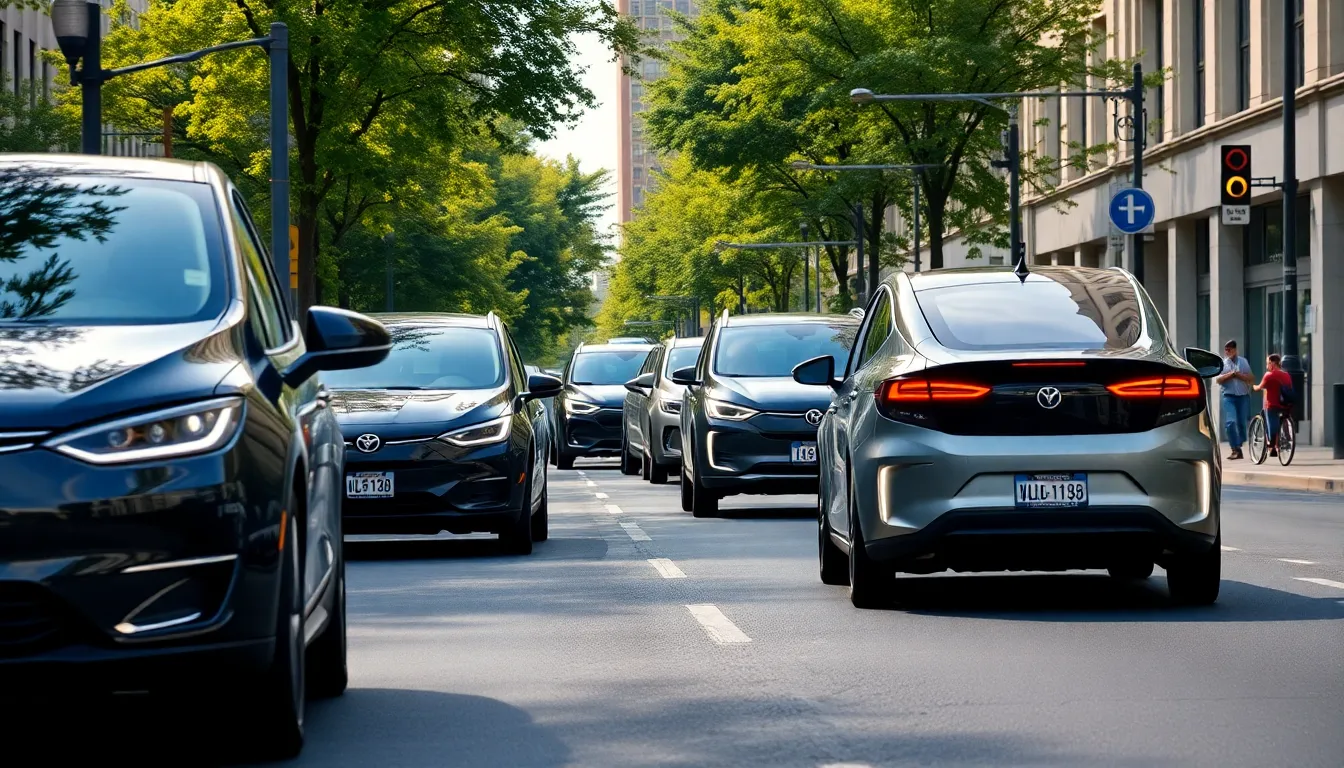
Autonomous electric fleets offer substantial benefits that enhance transportation systems while addressing critical environmental and economic issues.
Environmental Impact
Autonomous electric fleets significantly reduce greenhouse gas emissions. Transitioning to electric vehicles (EVs) achieves up to a 70% decrease in emissions compared to traditional gasoline vehicles. These fleets rely on advanced AI for route optimization, which minimizes energy consumption. Research indicates that optimized route planning can reduce fuel use by 10-15%. Moreover, autonomous technologies improve traffic flow, thus decreasing congestion-related emissions. As electric vehicles emit no tailpipe pollutants, cities experience improved air quality, positively impacting public health.
Economic Advantages
Economic benefits of autonomous electric fleets are substantial. Fleet operators enjoy lower operational costs due to reduced fuel and maintenance expenses. Electric vehicles require 40% less maintenance than gasoline-powered counterparts, further decreasing expenditures. The integration of autonomous systems also maximizes asset utilization through efficient route planning and scheduling, increasing profitability. Freight costs can decline by up to 30% as delivery times and logistical inefficiencies diminish. Overall, these fleets serve as a feasible solution for increasing the economic sustainability of transportation systems.
Challenges Facing Autonomous Electric Fleets
Autonomous electric fleets encounter significant challenges that impede their widespread adoption and efficiency. These challenges include technological limitations and regulatory hurdles.
Technological Limitations
Technological limitations significantly affect the deployment of autonomous electric fleets. These fleets rely on cutting-edge technologies, such as AI and advanced sensors. Despite ongoing advancements, current systems struggle with real-time decision-making in complex environments. Harsh weather conditions, such as heavy rain or snow, can impair sensor functionality and vehicle performance. Additionally, the integration of different technologies across various manufacturers complicates seamless operation. A lack of standardized protocols hinders interoperability, creating gaps in communication between vehicles and infrastructure. Continuous improvements in AI algorithms and sensor technology are essential for enhancing the reliability and safety of autonomous operations.
Regulatory Hurdles
Regulatory hurdles present a substantial barrier to autonomous electric fleets. Governments worldwide grapple with crafting policies that address safety, liability, and public acceptance of self-driving vehicles. As these fleets represent a significant shift in transportation, regulatory frameworks need updates to accommodate new technologies. Local laws often vary, creating inconsistencies that complicate fleet operations across regions. Authorities require comprehensive testing and rigorous approval processes, delaying the deployment of autonomous vehicles. Engaging stakeholders and creating collaborative frameworks will facilitate the necessary policy adaptations, enabling smoother integration of autonomous electric fleets into the existing transportation ecosystem.
Future of Autonomous Electric Fleets
The future of autonomous electric fleets offers exciting developments with the potential to reshape transportation. Innovations and market growth highlight the trajectory and impact of these fleets.
Innovations on the Horizon
Innovations in technology drive the evolution of autonomous electric fleets. Advanced AI algorithms enhance route optimization, reducing travel times while minimizing energy consumption. Innovations in battery technology increase energy density, leading to longer ranges for electric vehicles. Enhanced sensor capabilities, including LiDAR and radar, improve navigation accuracy in diverse environments. Incorporating 5G connectivity allows vehicles to communicate in real-time, facilitating better traffic management. Together, these advancements contribute to a smoother integration of autonomous electric fleets into urban landscapes.
Potential Market Growth
Potential market growth for autonomous electric fleets remains robust. The global market for autonomous vehicles is projected to reach $557 billion by 2026, driven by demand for sustainable transportation solutions. Research estimates indicate that the electric vehicle market itself could exceed $800 billion by 2027, enhancing the attractiveness of fleets adopting these technologies. With an increasing focus on environmental sustainability, cities are expected to invest in charging infrastructure and smart traffic systems, further supporting fleet expansion. As businesses recognize the operational efficiencies and cost savings, the adoption of autonomous electric fleets will likely accelerate, transforming logistics and urban mobility.
The rise of autonomous electric fleets marks a pivotal shift in transportation. By leveraging advanced technology these fleets promise to enhance efficiency safety and sustainability in urban mobility. As cities embrace these innovations the potential for reduced emissions optimized routes and lower operational costs becomes increasingly clear.
While challenges remain in technology and regulation the future looks bright. Continued advancements in AI battery technology and connectivity will drive the evolution of these fleets. With a projected market growth that underscores their importance autonomous electric fleets are set to redefine logistics and urban transportation for a greener smarter future.